


Five Questions to Ask Before Year-End
Year-end is an important opportunity to step back from day-to-day financial decisions and consider how changes in tax law, markets and your personal circumstances may affect your broader wealth plan.
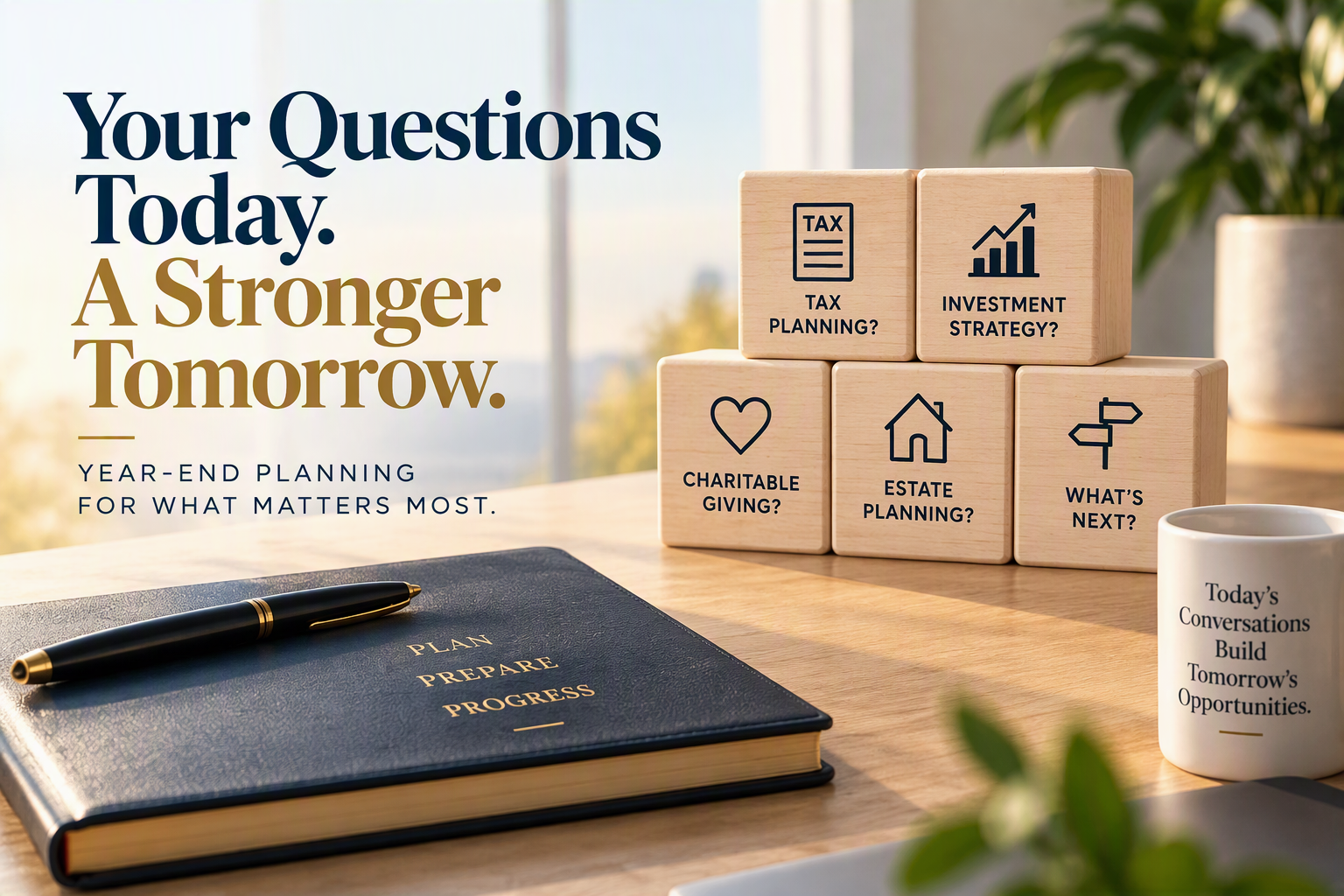
Five questions can help focus that conversation:
1. Has my tax picture changed?
A significant change in income, investment gains, business activity, compensation or residency can create new planning opportunities - or unexpected tax consequences. Reviewing projected income and deductions before December 31 can help identify actions that may still be available this year.
2. Should I realize gains or losses?
Investment decisions should be driven first by portfolio objectives, but taxes matter. Year-end can be an appropriate time to harvest losses, reduce concentrated positions or strategically recognize gains while considering the impact on the overall portfolio.
3. Is my charitable giving strategy still optimal?
New rules effective in 2026 generally limit an itemizer’s charitable deduction to contributions exceeding 0.5% of adjusted gross income. For significant donors, this makes the timing and structure of charitable gifts increasingly important and may enhance the value of strategies such as bunching contributions or donating appreciated assets.
4. Does my estate plan still reflect my objectives?
The federal estate and gift tax basic exclusion is $15 million per individual in 2026, while the annual gift-tax exclusion remains$19,000. But estate planning extends well beyond minimizing estate taxes. Family circumstances, asset values, trust provisions, basis planning and wealth-transfer objectives should also be reviewed periodically.
5. What do I expect to change next year?
A business sale, retirement, major purchase, liquidity event or other significant transition may make it advantageous to accelerate, or defer, certain decisions.
The most effective year-end planning is rarely about a single strategy. It is about coordinating tax, investment, estate and charitable decisions around the family’s broader goals.


